
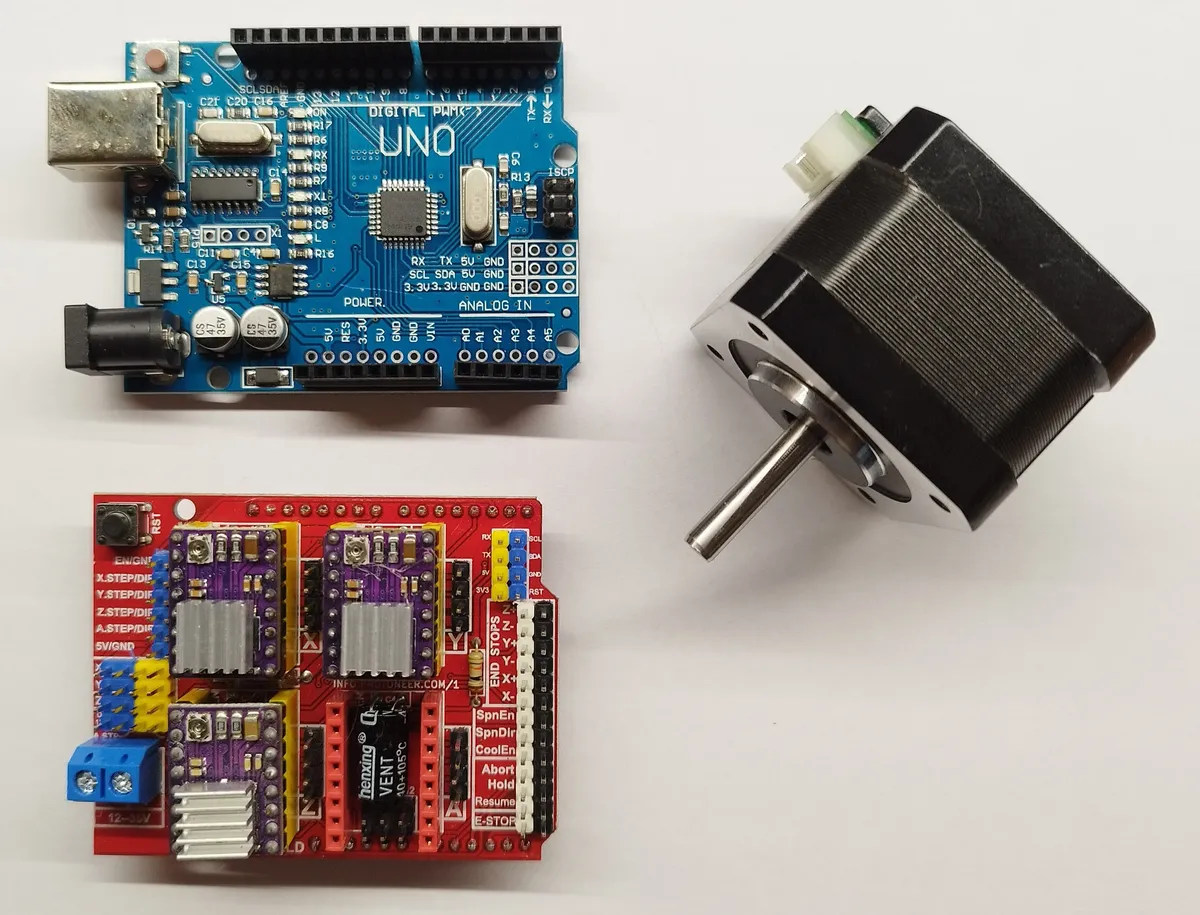
Servo vs Stepper: Which Motor Do You Need?
Choosing between servo motors and stepper motors is one of the most common decisions in robotics and automation. Both convert electrical signals into precise motion, but they work very differently.
Quick Decision Guide
- Choose Stepper: Open-loop, precise positioning, lower cost, holding torque
- Choose Servo: Closed-loop, high speed, high torque, dynamic loads
Full Comparison Table
| Feature | Stepper Motor | Servo Motor |
|---|---|---|
| Control Type | Open-loop | Closed-loop (feedback) |
| Feedback | None (usually) | Encoder built-in |
| Speed Range | Low-medium | High |
| Torque at Low Speed | Excellent | Good |
| Holding Torque | Excellent | Requires power |
| Resolution | 1.8° (200 steps/rev) | Continuous |
| Cost | Low | Higher |
| Complexity | Simple driver | Complex driver/controller |
Stepper Motors
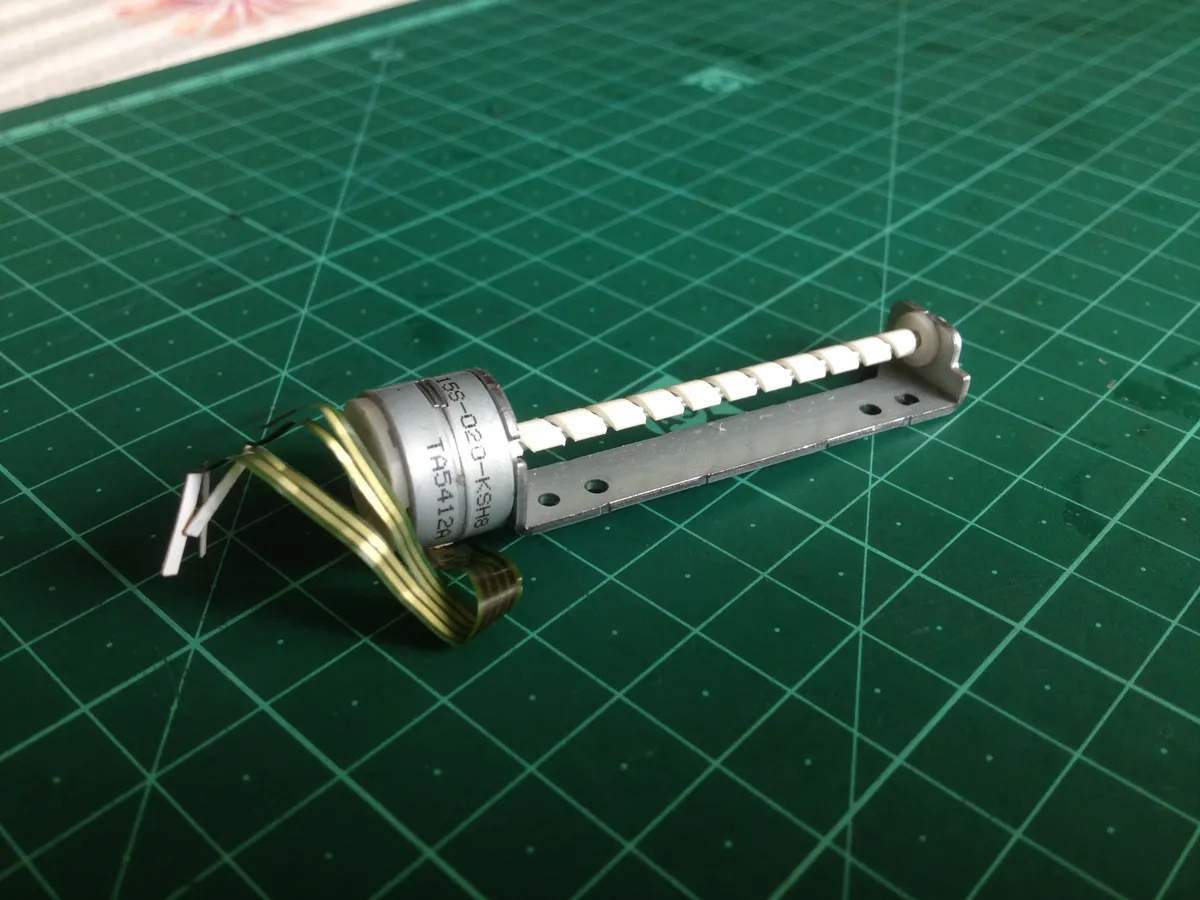
Stepper motors divide a full rotation into discrete steps. A typical NEMA 17 has 200 steps per revolution (1.8° per step). With microstepping, this can be increased to 3200+ steps.
How Steppers Work
Inside a stepper, electromagnetic coils are energized in sequence. Each pulse moves the rotor by exactly one step. No feedback is needed because the motor either moves or stalls.
Types of Stepper Motors
- Bipolar (4-wire) - Higher torque, requires H-bridge driver
- Unipolar (5/6-wire) - Simpler driver, lower torque
- Hybrid - Combines permanent magnet + variable reluctance
Stepper Advantages
- Excellent positioning without feedback
- High holding torque when stationary
- Low cost ($10-50 for NEMA 17)
- Simple to control (step/direction signals)
Servo Motors
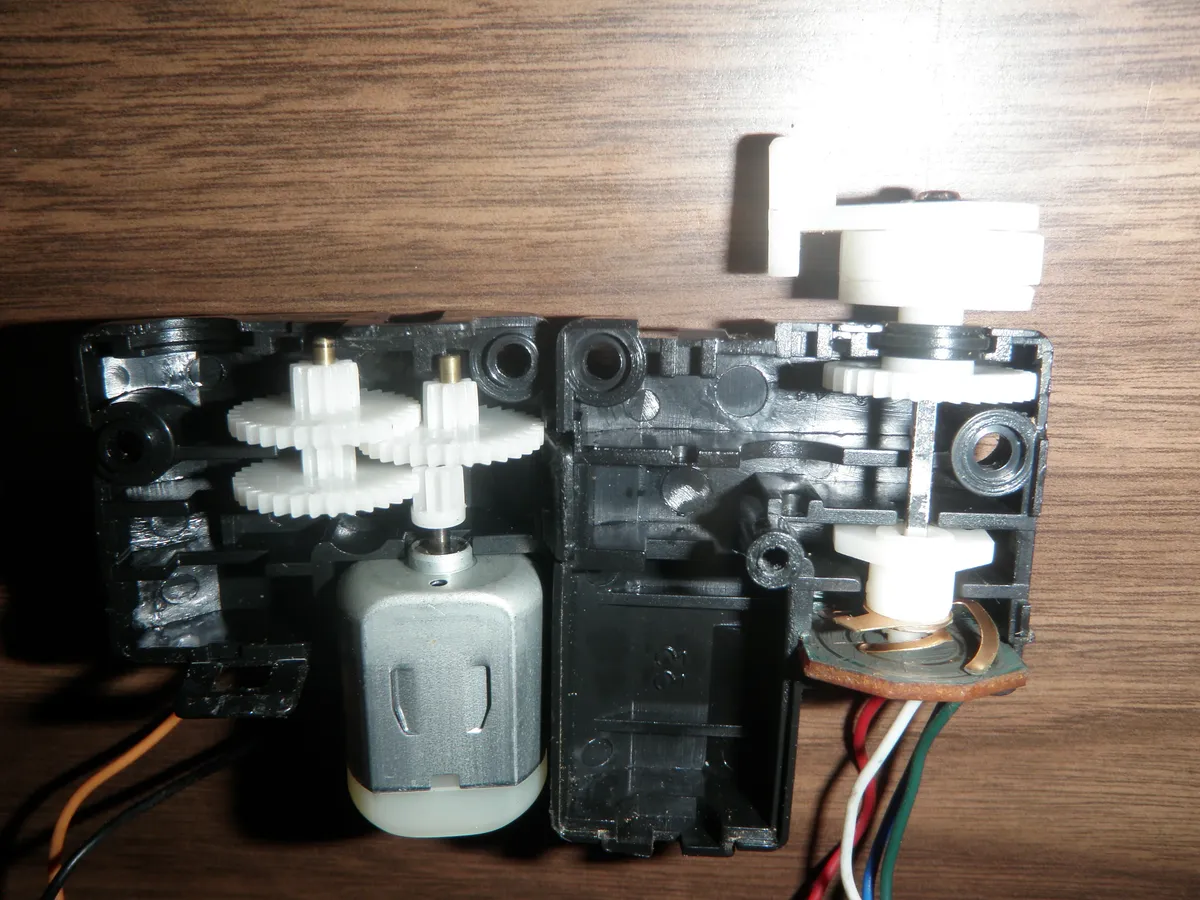
Servo motors use a closed-loop system with feedback from an encoder. The controller constantly adjusts power to match the commanded position.
How Servos Work
An encoder tracks the shaft position. The servo driver compares the actual position to the target and applies corrective current. This allows precise control even under varying loads.
Types of Servo Motors
- RC Servo - Position via PWM signal, limited rotation
- AC Servo - Industrial, high power, brushless
- DC Servo - Brushed motor with encoder feedback
Servo Advantages
- High speed operation
- Maintains torque at high speeds
- Closed-loop prevents missed steps
- Better efficiency (power on demand)
Applications
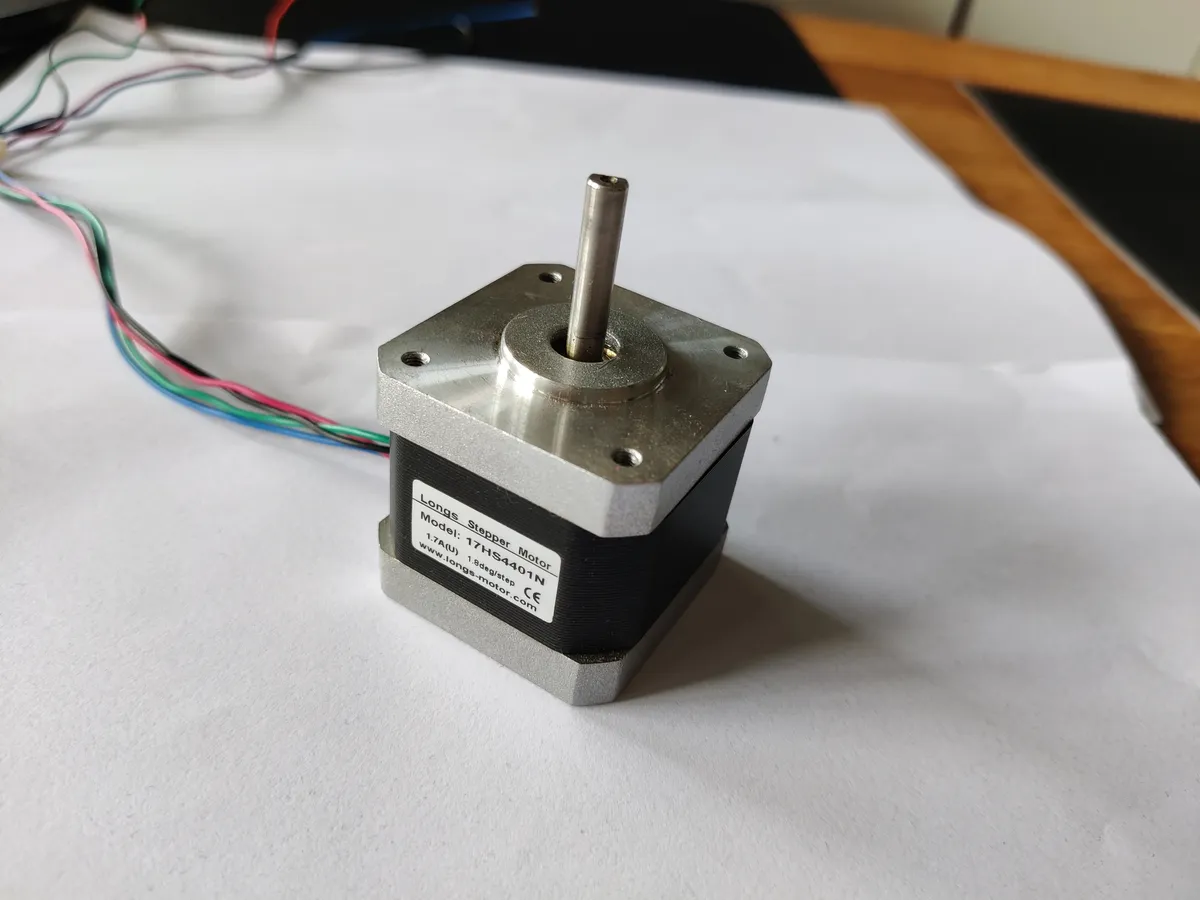
Stepper Applications
- 3D printers (X, Y, Z, extruder)
- CNC routers and mills
- Camera slider/gimbals
- Scientific instruments
- Automation equipment
- Disk drives (head positioning)
Servo Applications
- Industrial robots
- RC vehicles and drones
- CNC machining centers
- Pick-and-place machines
- Haptic feedback devices
- Aircraft control surfaces
Common Drivers
| Stepper Drivers | Servo Controllers |
|---|---|
| A4988 (2A, 1/16 microstep) | PWM signal (RC servo) |
| DRV8825 (2.5A, 1/32 microstep) | PCA9685 (16-channel PWM) |
| TMC2209 (silent, 1/256) | Industrial servo drives |
| TB6600 (4A, DIP switches) | Closed-loop stepper drivers |
Motors & Drivers
Browse our electronics collection for stepper motors, servo motors, and drivers.
Building a CNC? See our GRBL Controller Setup Guide.
Frequently Asked Questions
Can I use stepper motors instead of servos in a robot arm?
Yes, stepper motors work well in robot arms for educational, hobby, and light-duty applications. Many successful robot arm designs use NEMA 17 or NEMA 23 steppers. However, steppers have limitations: they provide less torque at higher speeds, can lose steps under excessive load without detection, and consume more power. For professional or high-performance robot arms requiring fast movements, heavy payloads, or collision detection, servo motors are the better choice despite higher cost.
What does 'lost steps' mean with stepper motors and why does it matter?
Lost steps occur when a stepper motor fails to move the commanded distance due to excessive load, too-rapid acceleration, or mechanical binding. Because steppers use open-loop control without position feedback, the controller doesn't know steps were lost. This causes position error that accumulates over time. If your CNC machine loses 10 steps, it will be 10 steps off-position for all subsequent operations until re-homed. Servos prevent this through closed-loop feedback that continuously verifies actual position matches commanded position.
Are servo motors always better than stepper motors?
No, servos are not universally better—they're better for specific applications. Servos excel at high speeds, provide energy efficiency, and offer closed-loop accuracy, but they cost significantly more and require complex tuning. For applications like 3D printing, camera sliders, or hobby CNC routers where stepper limitations aren't problematic, steppers provide excellent results at fraction of servo cost. The 'better' motor is the one that meets your requirements at acceptable cost, not necessarily the highest-performance option.
How do I calculate what size motor I need for my project?
Calculate required torque by analyzing forces, inertia, and acceleration. For linear systems: convert linear force and speed to rotational equivalents using lead screw pitch or pulley diameter. For rotational loads: calculate moment of inertia and multiply by desired angular acceleration. Add friction torque estimates. Use the formula T = (F × r) + (I × α) + T_friction. Add 30-50% safety margin. Compare result to motor torque curves across your operating speed range. Online calculators from motor manufacturers simplify this process. When in doubt, test with slightly oversized motor and optimize later.
What is microstepping and do I need it?
Microstepping divides each full step of a stepper motor into smaller microsteps by varying current to the motor coils. A 200 step/rev motor with 16x microstepping becomes 3200 steps/rev. Benefits include smoother low-speed operation, reduced vibration and resonance, quieter operation, and improved resolution. Nearly all modern applications benefit from microstepping. Minimum recommendation is 16x microstepping; 32x or 256x provides even better performance. Modern drivers like TMC2208/TMC2209 include sophisticated microstepping with minimal cost premium over basic drivers, making microstepping a standard feature rather than optional upgrade.